Your Franchise Agreement Cannot Save a Weak Business Model

The Most Expensive Mistake in Franchising Usually Starts With One Sentence
“We need a franchise agreement.”
No.
You need a franchise system.
That distinction matters more than most founders realise.
Too many business owners decide they want to franchise and immediately run to lawyers asking for:
A franchise agreement
A disclosure document
Operations manual templates
Compliance paperwork
They believe the legal documents are the beginning.
They are not.
They are the receipt.
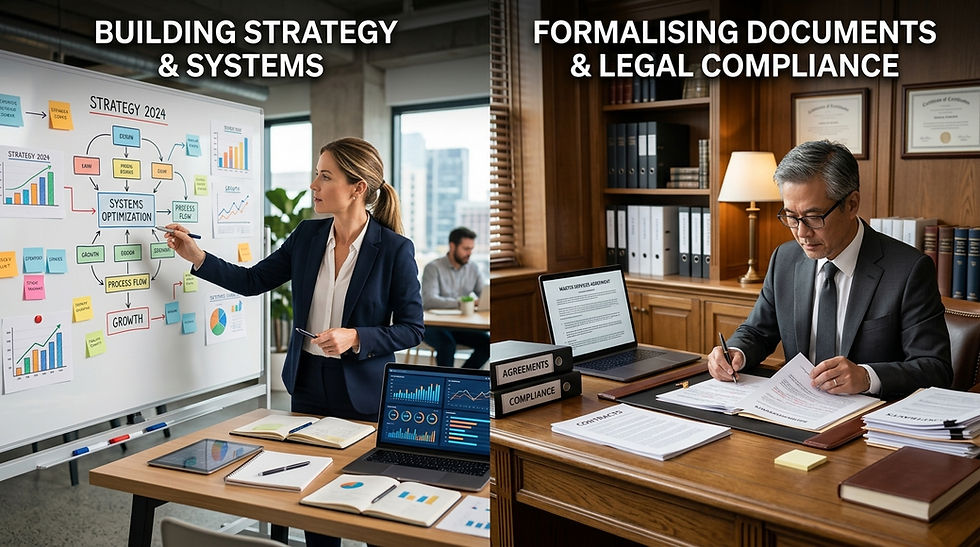
Legal documents record strategy.
They do not create it.
And if the underlying business model is weak, all you have done is pay a professional to document your future problems.
That is expensive stupidity.
Unfortunately, the industry is full of it.
Government Compliance Does Not Mean Commercial Readiness
This is where people get dangerously comfortable.
Business.gov.au makes it clear that franchisors must provide a disclosure document, franchise agreement, information statement, and comply with the Franchising Code of Conduct before entering into a franchise agreement. There is no formal government approval process that certifies whether your franchise model is commercially sound.
That means something important.
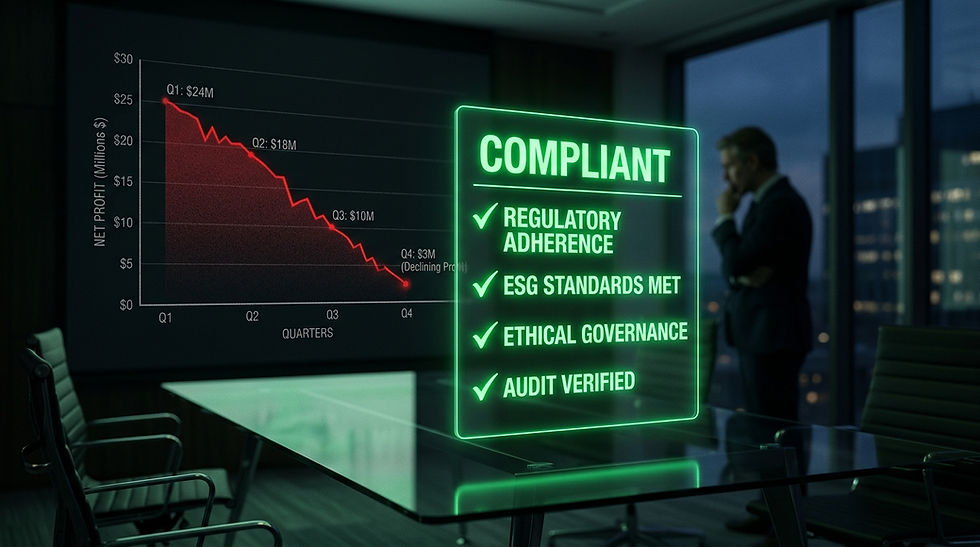
You can be fully compliant and still be launching a terrible franchise system.
No regulator is checking whether:
Your franchisee can actually make money
Your support model is commercially realistic
Your royalty structure is sustainable
Your operations are truly repeatable
Your founder dependency is dangerous
Compliance is necessary.
It is not proof of strategic readiness.
And confusing those two ideas creates zombie franchises.
Legally launched.
Commercially broken.
You Cannot Legally Document Your Way Out of Commercial Failure
Let’s be blunt.
A weak business model does not become strong because the paperwork looks impressive.
If:
The unit economics are weak
The franchisee cannot make money
The customer experience is inconsistent
The founder is still the operating system
The recruitment strategy is vague
The operations are undocumented
The franchise agreement changes nothing.
It may protect certain legal rights.
It does not fix commercial reality.
And commercial reality always wins.
This is why so many franchise systems quietly decay.
There are agreements.
There are some early franchisees.
There is legal compliance.
There may even be early growth.
But underneath, the economics are wrong.
Support becomes conflict.
Recruitment becomes harder.
Trust disappears.
That failure did not begin in legal.
It began in strategy.
We Encountered A Client Who Faced This Exact Issue
One of our “fixer-upper” franchisor clients recently reached the final stages of legal drafting with a well-known law firm.
The franchise agreement was progressing.
Disclosure was nearly complete.
Schedules were being finalised.
On paper, everything looked close.
Then the real work surfaced.
The operations manual was not only unfinished but the replicable depth of the business had not been captured.
Minimum performance criteria were still being debated.
The logic behind the fee structure still needed refinement.
Renewal structures required commercial review.
Franchisee economics needed further validation.
In other words:
The legal document was trying to close before the commercial strategy was fully settled.
That is dangerous.
Because once legal documents are locked, every poorly thought-out commercial decision becomes harder and more expensive to fix.
This is where weak franchisors rush.
Strong franchisors pause.
The Franchise Agreement Is Not the Strategy
This is where many founders misunderstand the lawyer’s role.
They ask:
“What should our royalty be?”
“What should our transfer fee be?”
“What should renewal look like?”
“What should minimum performance standards be?”
Wrong person.
Those are strategic commercial decisions first.
Legal drafting comes second.
A lawyer can record the decision.
They should not be inventing the commercial model.
Because if your royalty structure is wrong, it does not matter how beautifully the clause is written.
If your franchisee cannot make money, drafting quality is irrelevant.
This is why I keep saying:
Legal documents record strategy.
They do not create it.
You must know the answer before drafting begins.
Otherwise you are outsourcing thinking.
That is lazy leadership.
Unit Economics Must Exist Before Legal Protection
Before any agreement is drafted, one question must be answered:
Can a single franchisee succeed financially?
That means proper single-unit modelling:
Set-up costs
Working capital
Rent assumptions
Labour sensitivity
Reasonable owner income
Royalty sustainability
Marketing contributions
Payback periods
Return on investment
Item 14 disclosure logic
This is not optional.
This is the commercial spine of the franchise system.
If the numbers do not work, stop.
Do not proceed to legal.
Fix the economics first.
Because scaling a bad model is not growth.
It is multiplication of failure.
And multiplication of failure with legal paperwork attached is still failure.
Just more expensive.
Operations Must Exist Before They Can Be Enforced
Another common mistake: Writing legal obligations for operational systems that do not actually exist.
The agreement says standards must be followed.
But where are the standards?
The agreement says compliance is mandatory.
But how is compliance trained?
The agreement says brand consistency is required.
But is the customer experience actually consistent today?
Business.gov.au frames franchising around the franchisor controlling how the business operates, through systems, procedures, and standards, not just contracts.
That supports a simple truth: You cannot enforce assumptions.
You can only enforce clarity.
This is why operations manuals matter.
Not as admin.
As infrastructure.
If the system depends on founder memory instead of documented behaviour, enforcement becomes weak and disputes become predictable.
Recruitment Happens Before the Agreement Matters
Most founders overestimate the legal document in franchise recruitment.
They think franchisees commit because the agreement is strong.
Wrong.
Franchisees commit because they trust the system.
They believe:
The economics are credible
The customer demand is repeatable
The support is real
The founder is not improvising
Their family can trust the decision
The agreement formalises belief.
It does not create belief.
If confidence is weak, no amount of legal drafting fixes it.
A thicker agreement does not create a better investment.
It creates a heavier folder.
That is all.
Compliance Without Commercial Fairness Creates Conflict
This is where bad franchisors create their own disputes.
They enforce rules that were never commercially sensible.
High royalties with weak support.
Aggressive performance criteria without realistic operating assumptions.
Punitive transfer fees.
Renewal structures that feel like punishment.
Yes, they may be legally enforceable.
That does not make them smart.
Because franchise relationships are commercial relationships before they become legal disputes.
If the economics feel unfair, trust disappears.
And once trust disappears, everything becomes harder:
Compliance
Retention
Recruitment
Network Performance
Brand Protection
Sophisticated franchisors understand that fairness is not softness.
It is strategic stability.
Lawyers Are Not Business Model Architects
This needs to be said clearly.
A great franchise lawyer is essential.
But they are not your strategist.
Their job is not to design your commercial model from scratch.
Their job is to protect and structure what should already be strategically sound.
This is where many founders waste money.
They expect lawyers to solve:
Weak economics
Poor recruitment positioning
Unclear customer archetypes
Lack of operational systems
Founder dependency
That is not legal work.
That is business architecture.
If you hand a weak business model to a lawyer, you do not get a strong franchise.
You get expensive paperwork around a weak business.
Understand the difference.
It will save you a fortune.
The Operations Manual Is Often More Important
This surprises people.
But in practical network life, the operations manual often matters more than the franchise agreement.
Why?
Because the agreement defines the relationship.
The manual defines daily behaviour.
That is where disputes are prevented.
That is where consistency is protected.
That is where customer experience lives.
That is where brand integrity survives.
The agreement matters when things go wrong.
The manual matters every day.
That is why founders who obsess over legal drafting but ignore operations discipline are building risk.
Not protection.
Stop Asking “Do We Need a Franchise Agreement?”
Ask a better question:
Is this business actually worthy of replication?
That is the real starting point.
Because if the answer is no, legal documents are premature.
You need:
Strong unit economics
Repeatable customer demand
Documented operational systems
Franchisee profitability
Recruitment architecture
Brand consistency
Founder independence
Then legal documentation becomes powerful.
Without that, it becomes theatre.
And theatre is expensive.
Build the Business First. Document It Second.
This is the philosophy.
Do not start with paperwork.
Start with commercial truth.
Build the business.
Stress-test the model.
Challenge the assumptions.
Validate the economics.
Strengthen the operations.
Prove the customer experience.
Then document it.
That is how serious franchisors think.
Everyone else is just buying stationery.
Talk to Someone Who Understands Commercial Franchising
After more than 25 years working across franchised industries and systems, I can tell you this:
Most franchise failures are not legal failures.
They are commercial failures that legal documents could not hide.
At Franchising Made Easy®, we help business owners become ready for franchising by building the business before the paperwork.
That includes:
Single-unit economics
Operations systems
Franchise recruitment architecture
Legal alignment
Item 14 strategy
Terminal value planning
Enterprise value design
Because the goal is not to own a franchise agreement.
It is to own a franchise system worth protecting.
If your franchising strategy begins with legal documents instead of commercial logic, you are starting in the wrong place.
Speak With a Franchise System Architect
If you are exploring franchising and want to determine whether your business may be ready for franchising, understanding the development process is an important first step.
At Franchising Made Easy®, we help founders design franchise systems that are structurally integrated and capable of sustainable growth.
If you would like to explore how franchising could work for your business, consider speaking with an experienced Franchise System Architect.