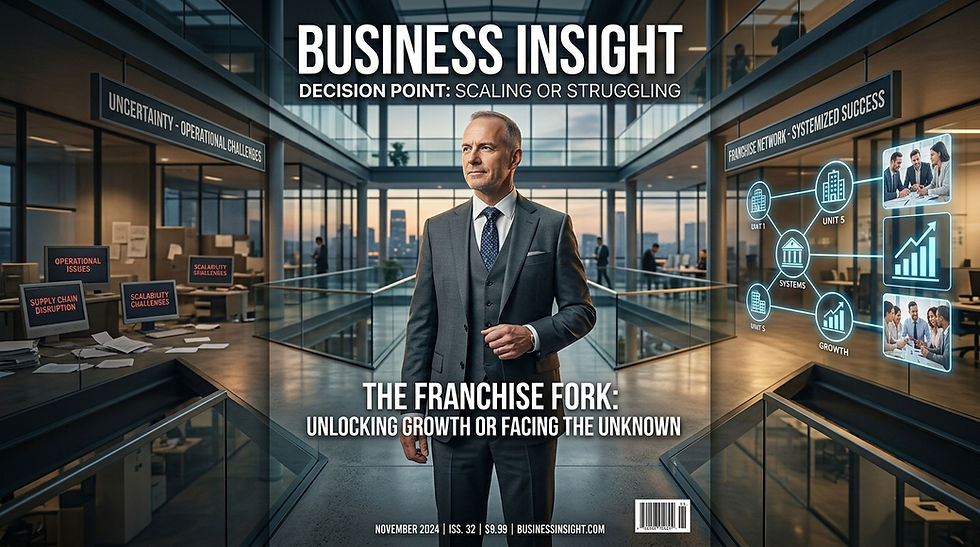
When the Economy Turns, Independents Break. Here's Why Solid Franchised Businesses Don't (As Much).
- Barry Money

- Jun 24
- 4 min read
Updated: Jun 27
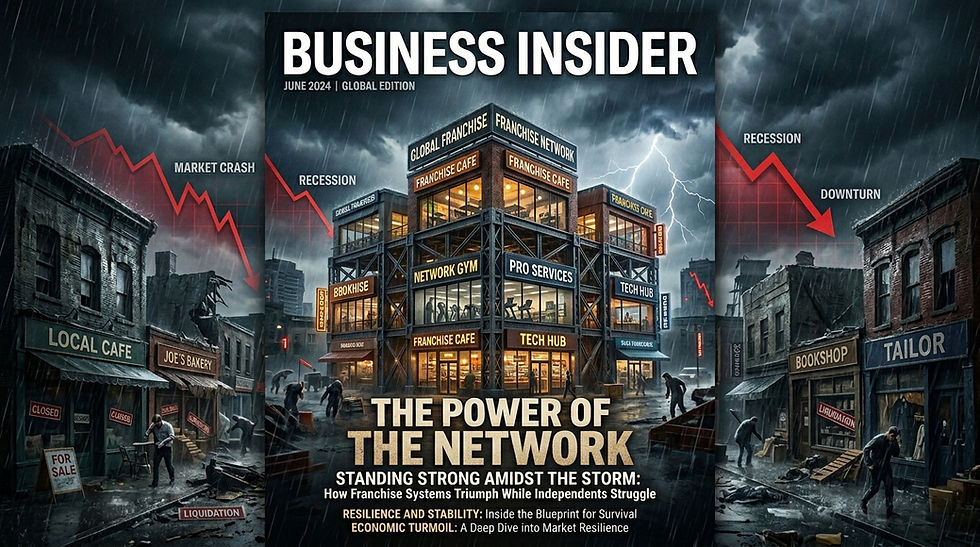
Australia is in the middle of a business failure wave. Not a blip. Not a post-COVID correction. A structural culling of businesses that were never built to withstand pressure.
The numbers are sporadic and slightly outdated, but the ones that are available are confronting. ASIC recorded 14,722 companies entering external administration in 2024–25, up 33% in a single year. Construction. Hospitality. Retail. Sector after sector is being stripped back. The ATO issued 84,529 Director Penalty Notices in 2024–25, a 136% increase on the prior year. One in three businesses carrying ATO debt above $100,000 did not survive the year.
And yet, not every business is equally exposed.
The Problem Isn't the Economy. It's the Architecture.
When economists talk about why businesses fail in a downturn, they tend to focus on external factors, interest rates, inflation, consumer spending. Those things matter. But the Reserve Bank's own analysis of the insolvency surge pointed to something more fundamental: Businesses with weak financial controls and poor management structures were always going to fail. The economic pressure just accelerated the timeline.
That's the part most business owners don't want to hear. Because it means the recession didn't kill your business. Your business was already vulnerable. The recession just made it visible.
Independent businesses, built on the founder's instincts, informal systems, and personal relationships, carry structural fragility that doesn't show up when conditions are good. When consumer spending softens, when the ATO comes knocking, when a key staff member walks, the whole thing wobbles. Because there's no architecture underneath it.
What Franchised Businesses Have That Independents Don't
The franchise model is not a guarantee of success. Anyone who tells you otherwise is selling something. And I am focussing here on the solidly built franchise systems, not the zombie franchisors or the "kiss-me-quick" legal documents and a brochure type of franchise.
Solid franchising provides structural insulation that independent businesses simply don't have.
Here's what that looks like in practice:
Proven Systems
A solid franchised business operates from a documented, tested operating model. The franchisor has already absorbed the trial-and-error cost. The franchisee isn't guessing at pricing strategy or staff ratios, it's codified. When conditions tighten, you're not improvising. You're executing.
Brand and Marketing Infrastructure
Independent businesses spend years and significant capital building brand recognition. Franchisees enter day one with it. In a recession, when consumers pull back to trusted names, that brand equity is a commercial asset with real cash flow consequences.
Group Purchasing Power
Franchised networks negotiate supplier agreements at scale. When input costs spike, as they have across construction, food services, and retail, franchisees absorb that shock with significantly more leverage than a solo operator.
Franchisor Support
When conditions deteriorate, a good franchisor deploys support. Field consultants. Financial triage. Marketing pivots. The 2023 Franchise Council of Australia Pulse Check, covering 123 brands and over 19,000 businesses, found that 78% of franchisors had only needed to provide financial assistance to a minimal number of their units, even amid the rate and inflation cycle. That's not luck. That's the support model working.
Lender Confidence
Banks lend more readily, and on better terms, to franchisees operating within established systems. In a credit-tightening environment, that access is the difference between surviving a cash flow trough and going under in it.
The Statistics People Quote, and Why You Should Treat Them Carefully
The franchising sector often cites an 80% independent business failure rate over five years against a 20% franchisee failure rate. The CEO of the National Retail Association has used similar figures publicly for years.
The honest answer is that the data is contested. A 2012 US study found the survival rates comparable when you control properly for variables. The Griffith University franchising research, the most rigorous longitudinal work done on the Australian sector, doesn't make the comparison cleanly either.
What the evidence does support, consistently, is this: Franchised businesses carry structural advantages that reduce exposure to exactly the kind of conditions now killing independent operators. The system, the brand, the support, the capital access. These are not abstract benefits. They are direct responses to the specific failure modes now playing out across the Australian economy.
You don't need an overcooked statistic to make that argument. The argument stands on its own.
What This Means If You're Thinking About Franchising Your Business
The businesses being swallowed by this insolvency wave are, in the main, businesses that were built to run, not businesses that were built to scale.
One location. One operator. One set of systems in someone's head. When that breaks down, there's nothing to fall back on.
The businesses that are holding are the ones with architecture. Systems that run without the founder in the room. Brands that carry weight in the market. Financial models that have been stress-tested. Operating procedures that a new operator can pick up and execute.
That is exactly what a well-built franchise system provides. And it is exactly what the Franchising Made Easy® program is designed to help you construct, before you put your brand, your capital, and someone else's livelihood into the model.
If you're watching the insolvency data and thinking "my business is exposed," you're probably right. The question is what you do about it.
The answer isn't to wait for conditions to improve. The answer is to build the architecture that performs regardless of conditions - and frankly - regardless of whether you franchise!
Frequently Asked Questions
Are franchised businesses more resilient in a downturn?
Generally yes. Proven structures, shared support and operational consistency give franchise networks more stability than standalone independents.
What do the insolvency numbers show?
ASIC recorded a 33% rise in companies entering external administration in 2024–25, with ATO Director Penalty Notices up 136%.
What's the real driver of business failure in downturns?
Weak business architecture, not just the economy itself, is what leaves businesses exposed when conditions tighten.
Speak With a Franchise System Architect
If you are exploring franchising and want to determine whether your business may be ready for franchising, understanding the development process is an important first step.
At Franchising Made Easy®, we help founders design franchise systems that are structurally integrated and capable of sustainable growth.
If you would like to explore how franchising could work for your business, consider speaking with an experienced Franchise System Architect.