Simplifying the Franchise Development Process: No Hocus Pocus, Just Solid Strategy
- Barry Money

- Jun 4
- 4 min read
You've decided! "I want to franchise my business!" You’ve started talking to franchising consultants who are selling you their formula. It’s beginning to get confusing. You’re not sure if you’re going to get what you need at the end of it.
If that’s you, I understand. Franchise development can seem like a maze of jargon, high fees, and endless processes, especially when you're bombarded with consultants promising you the world.
But here's the truth: Franchising is complex, but franchise development is not that complicated. Sure, it requires effort, but you don’t need to be intimidated by the so-called “mysteries” of franchise development.

Let’s break it down into six key steps to make the process as transparent as possible. Sure, there are some details, but you’ll see that franchising your business is more straightforward than you think.
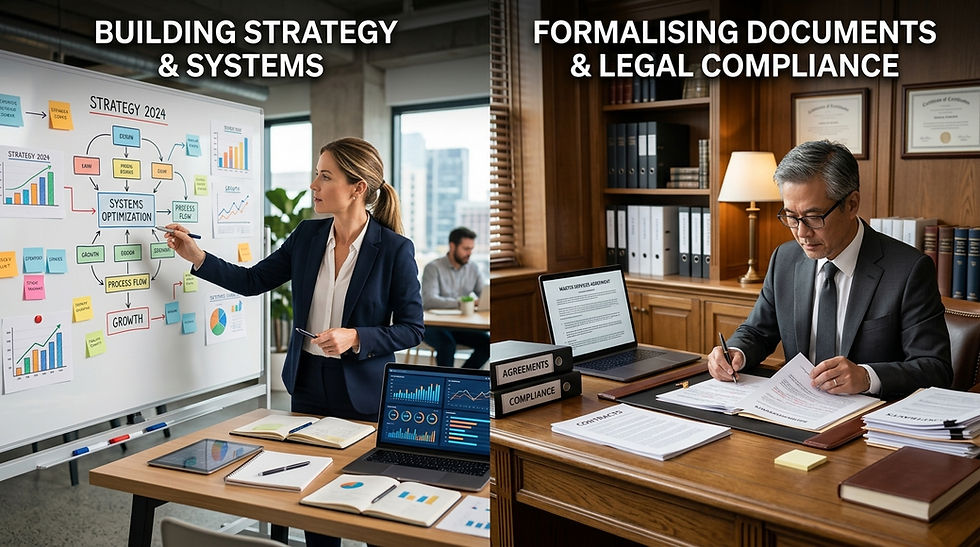
Step 1: Strategy – The Foundation of Everything
Before diving into any paperwork, legal requirements, or fancy models, you need to set your direction. This is where you ask yourself the tough questions:
Why do you want to franchise?
When are you planning to exit?
What roles are involved in your value chain, and where do you need to plug gaps before you hit the launch button?
How does my brand generate demand?
This stage is all about clarity. The more crystal clear you are on your business direction, the smoother the journey will be.
Step 2: Economic Modelling – Proving It Works
Now that you’ve got your strategy in place, it's time to crunch the numbers. Before you start pitching your franchise opportunity to anyone, you need to show that your concept is financially sound. Not just for you, but for your future franchisees too.
This is more than just a financial model, it’s a test to see if your business is viable for franchising. You'll want to prove that your business will be profitable for everyone involved, which is also a legal requirement under the Franchising Code of Conduct.
Step 3: Legal Frameworks & Documentation. Lay the Groundwork
Now comes the heavy lifting, setting up your legal documents. Too many consultants wait until the last minute for this, which can lead to oversight and legal nightmares down the road.
The legal framework isn't just a formality. It’s the "record-button" for your entire franchise system. This framework outlines how you and your franchisees will work together, ensuring everyone’s rights and obligations are crystal clear.
It’s essential to document your operational and commercial policies in line with your legal framework early on, this will save you headaches later.
Step 4: Preparing Your Operational Toolkit. Know Your Business Inside and Out
This is where things get really interesting. Sure, there are plenty of off-the-shelf templates out there for operations manuals and commercial policies, but let’s be honest: No one knows your business like you do.
Use those templates to spark your creativity, but don't settle for generic content. Dive deep into your business, capturing the essence of your brand, your values, your customer service, your techniques and your systems. This is the meat and potatoes of your system, but it's also the special sauce. After all, this differentiator is what will attract franchisees who want to be part of something special.
Step 5: Recruitment – Testing The Model
Here’s the thing: All the hard work you’ve put in so far culminates in one major step: Recruitment. If you’ve done the previous steps right, the recruitment phase should be easier. But here’s the kicker: Be cautious of recruitment agencies that promise too much without backing it up.
You need to make sure that any recruiter you hire aligns with your brand and values. Get a detailed marketing plan, access to their tech, and ensure you can audit the prospects you’ve paid for. This step is crucial because the success of your franchise network depends heavily on the quality of the franchisees you bring on board. That's why these days it's smarter to build your brand and activate your own recruitment marketing and build your onw recruitment nurturing process. It's not as hard as you think,
Step 6: Franchise System Launch. Market Like You Mean It
A big mistake that many franchisors make is neglecting the power of marketing during their launch. Yes, you have a strong business model, great legal framework, and solid franchisees, but what good is any of that if you don't have a marketing strategy that’s going to draw customers to those franchise locations?
Remember, franchisees aren’t just buying into your brand, they’re investing in the promise that your brand will attract customers. Integrating a solid marketing plan into your franchise development process is crucial to your success.
Barry's Final Thoughts: It’s Not Rocket Science
As you can see, franchising doesn’t have to be cloaked in mystery. While it requires careful planning and attention to detail, the steps are clear and straightforward. No hocus pocus here, just practical strategy, sound financial models, legal documentation, and a strong marketing plan.
If you’re ready to take the next step in franchising your business or need help along the way, don’t hesitate to reach out. We’re always happy to chat and help you navigate the journey. We have online franchising programs and VIP done-with-you franchise development programs.
Happy franchising!
Frequently Asked Questions
Why does franchise development feel confusing?
Many consultants sell their own proprietary "formula" without explaining clearly what you'll actually receive.
What should a franchise development process actually deliver?
A clear, strategic roadmap, not a mysterious process with an unclear end result.
How can founders avoid a confusing development experience?
Choose an advisor who explains each stage and deliverable upfront, in plain terms.
Speak With a Franchise System Architect
If you are exploring franchising and want to determine whether your business may be ready for franchising, understanding the development process is an important first step.
At Franchising Made Easy®, we help founders design franchise systems that are structurally integrated and capable of sustainable growth.
If you would like to explore how franchising could work for your business, consider speaking with an experienced Franchise System Architect.